Inside the Funding Gap

 Report on
Venture Capital &
Women
Report on
Venture Capital &
Women in Tech

Insights from 900 founders across 127 countries on the evaluation patterns shaping investment outcomes

Women-founded startups receive just 2–3% of global venture capital, a number that has barely changed over the past decade

But the funding gap alone doesn’t explain why this happens. Through Aurora’s work with founders, we kept hearing the same stories during fundraising, stricter scrutiny, harder credibility tests, and limited access to investor networks.

So we asked a question
What actuallyhappens when foundershappens whengo out to raise capital?founders go outto raise capital?
Founders Told Us
To answer that question, we analyzed 900+ responses from founders across 127 countries, representing 26% of Aurora applicants
These founders described their real fundraising experiences in their own words. By examining these narratives, we identified recurring patterns in how founders are evaluated — and where those patterns may be shaping investment decisions.
Hover over the highlighted country to see the barriers and a quote from the founder
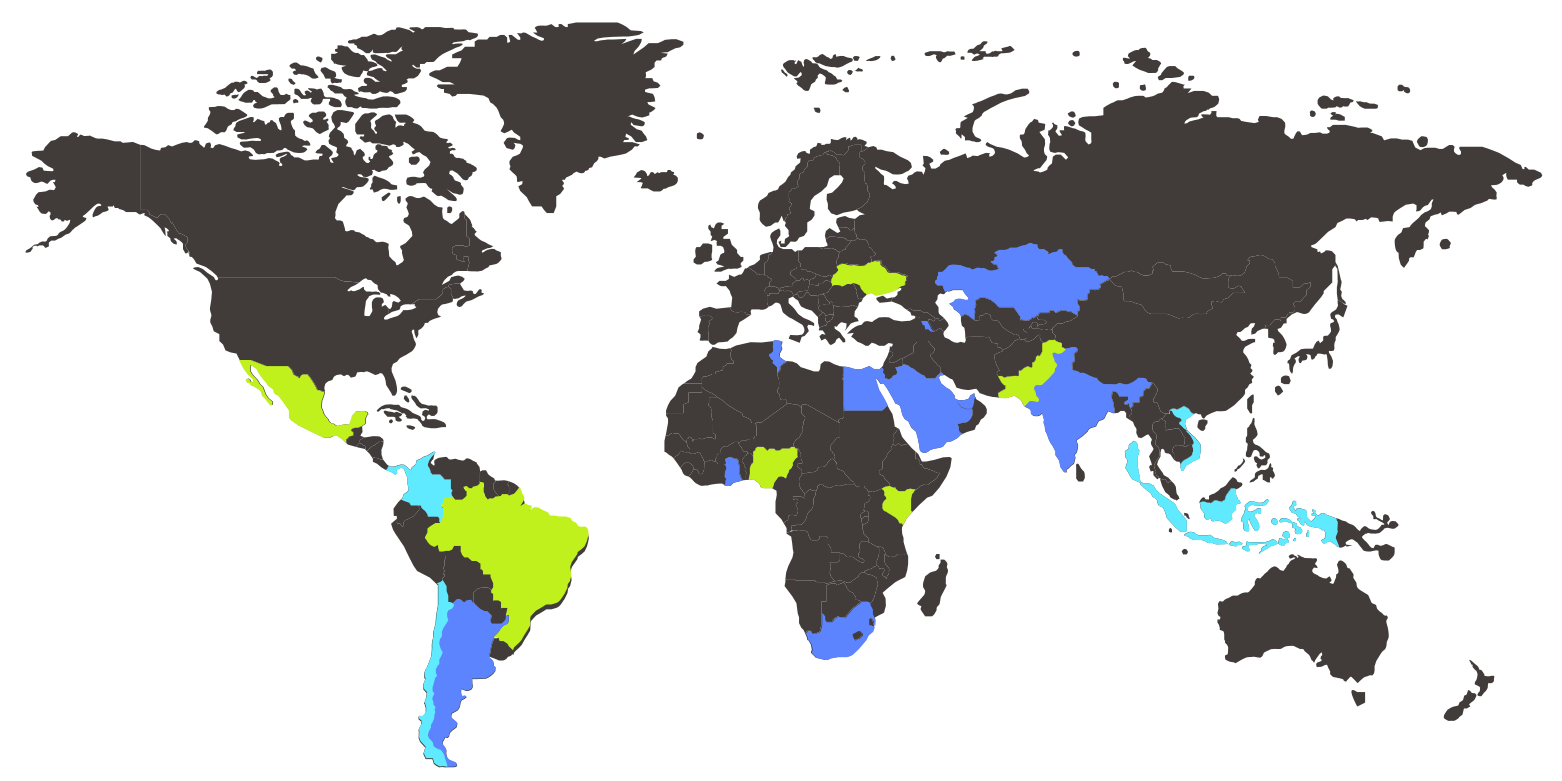
Argentina
Local woman founder:
“Investors perceive biotech as a male-led space regardless of the science behind the work”
Armenia
Local woman founder:
“Investors question the maturity of specific technologies when led by women”
Brazil
Local woman founder:
“People approach my husband after my pitch to congratulate and discuss our business”
Chile
Local woman founder:
“Topics like menopause are dismissed as niche or uncomfortable by male investors”
Colombia
Local woman founder:
“Women-led startups are mislabeled as social businesses rather than scalable ventures”
Egypt
Local woman founder:
“Investors ask intrusive questions about a husband’s permission to operate the business”
Ghana
Local woman founder:
“Investors claim “no founder-product fit’ despite experience, funding male peers with less finished MVPs”
India
Local woman founder:
“Unmarried founders are asked if they will quit after marriage; married ones if they are “done” having children”
Indonesia
Local woman founder:
“Investors prefer women to stick to “feminine” sectors like fashion or food, rather than tech”
Kazakhstan
Local woman founder:
“Women are discouraged from raising professional skills above men — “Tall Puppy” syndrome”
Kenya
Local woman founder:
“Are you technical enough to lead a deeptech company? Where is your male cofounder?”
Mexico
Local woman founder:
“VCs steer conversations toward male partners to provide “visibility” for the business”
Nigeria
Local woman founder:
“Women are asked to prove revenue metrics while men receive funding on ideas alone”
Pakistan
Local woman founder:
“I need to work triple compared to men just to prove my work”
Saudi Arabia
Local woman founder:
“Investors underestimate female-led startups, making the fundraising process significantly slower”
South Africa
Local woman founder:
“Funders often exhibit colorism, compounding gender bias for Black female founders”
Tunisia
Local woman founder:
“The same names keep getting funded, while most founders don’t even get the chance to pitch”
Ukraine
Local woman founder:
“Men feign investor interest to make personal advances during pitch meetings”
United Arab Emirates
Local woman founder:
“A male presence in the room often results in the business being taken seriously”
Vietnam
Local woman founder:
“Menstrual health products are dismissed as niche or uncomfortable by male investors”
Download the full report to see the data, insights, and implications for venture capital decision-making